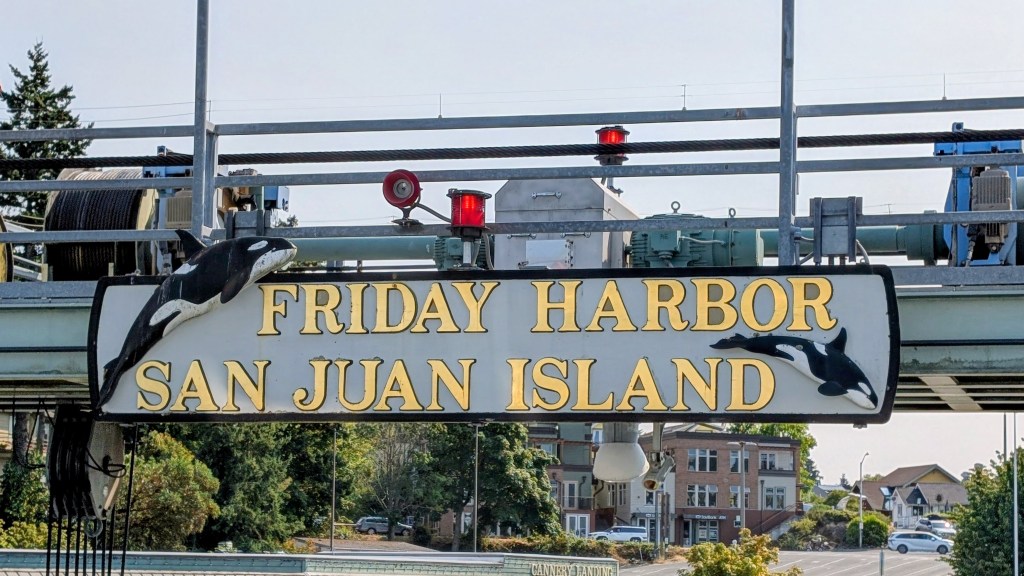
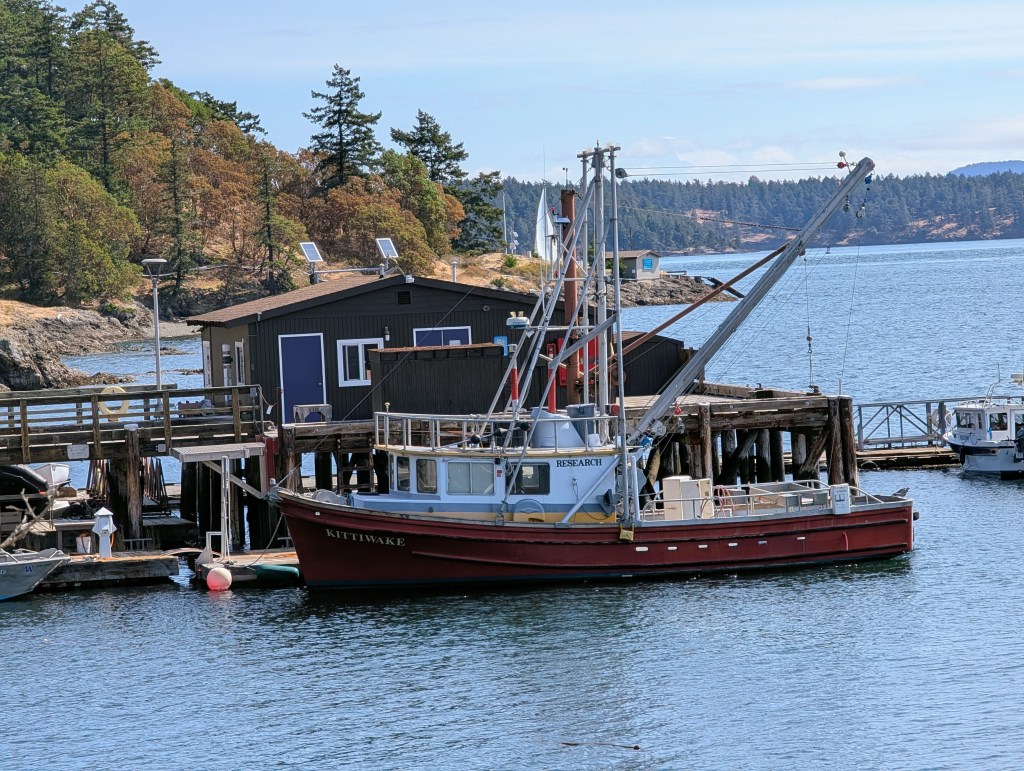
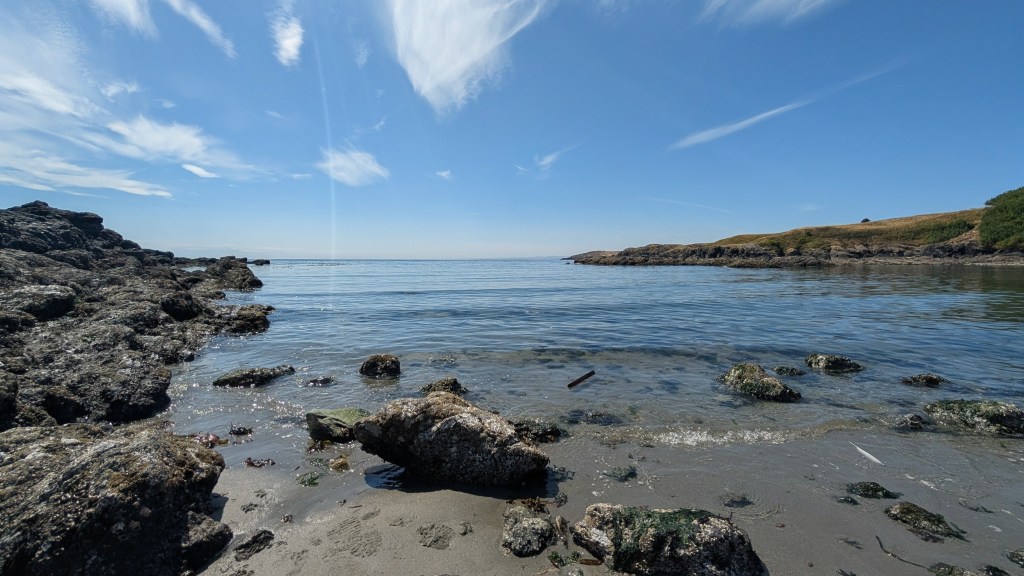
Recently, I had the opportunity to complete a two-week writing retreat as a visiting scholar at the Helen Riaboff Whiteley Center (HRWC) at the UW Friday Harbor Laboratories (FHL) on San Juan Island.
One of my favorite activities when I wasn’t writing or researching was to go tidepooling early in the morning along the shores of the Salish Sea any time there was a minus tide.
I was lucky enough to see a lot of unique critters while exploring different tidepooling hot spots across San Juan Island. Below is a short tidepooling guide that illustrates only a fraction of the incredible diversity of plants and animals I saw during my stay.
Common Tidepool Inhabitants of the San Juan Islands | Salish Sea
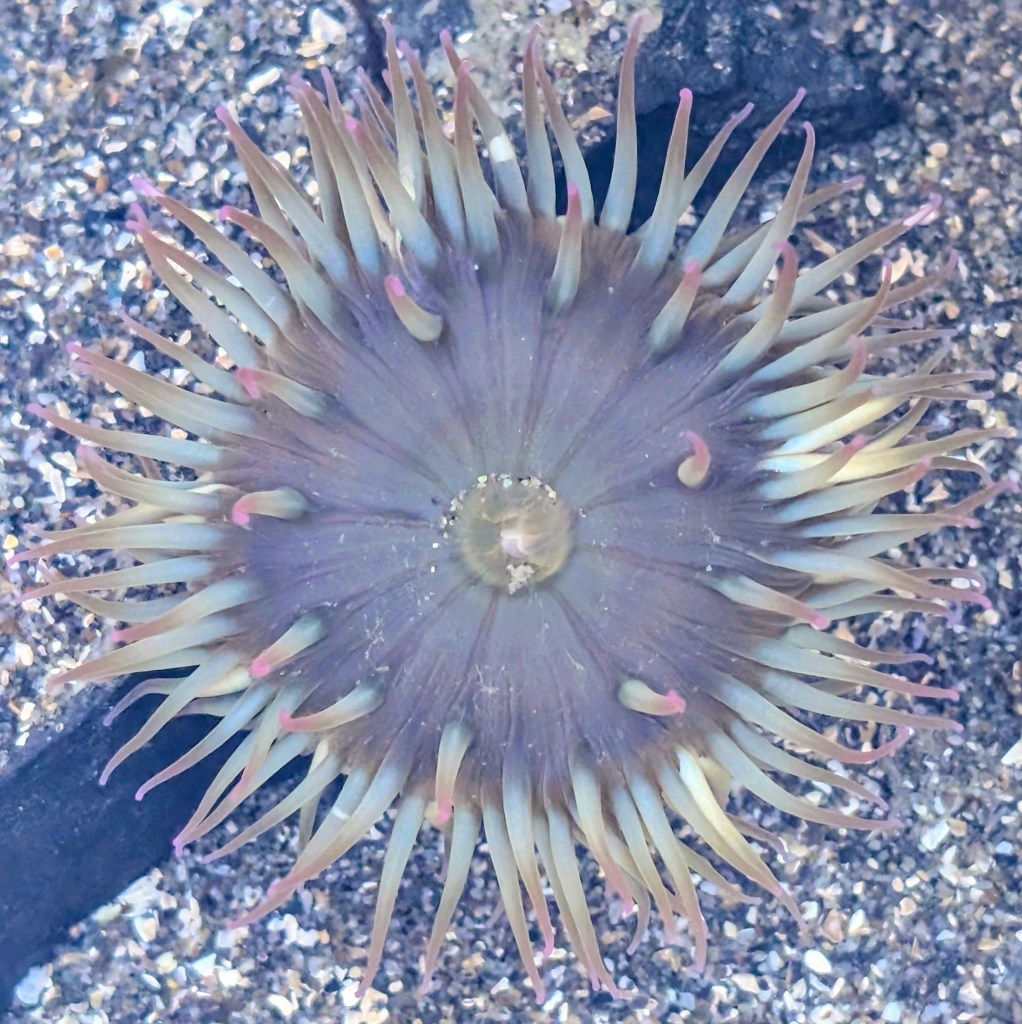
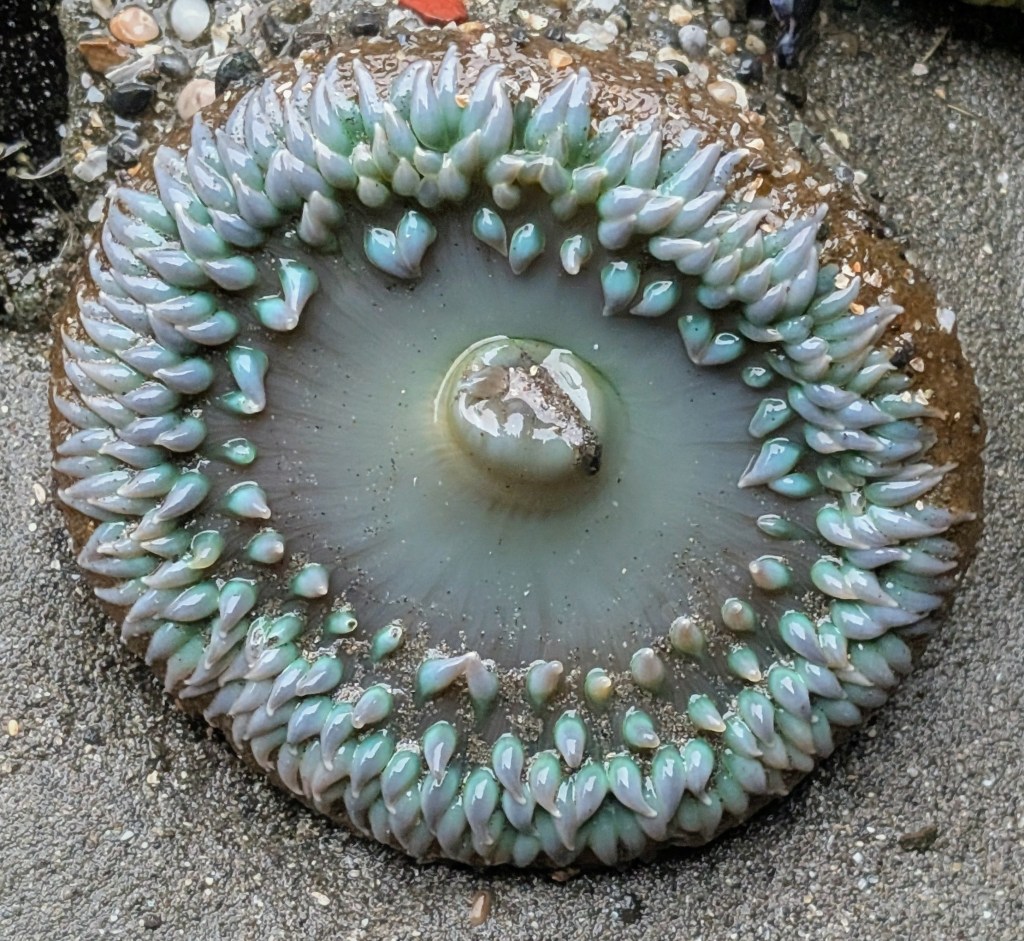
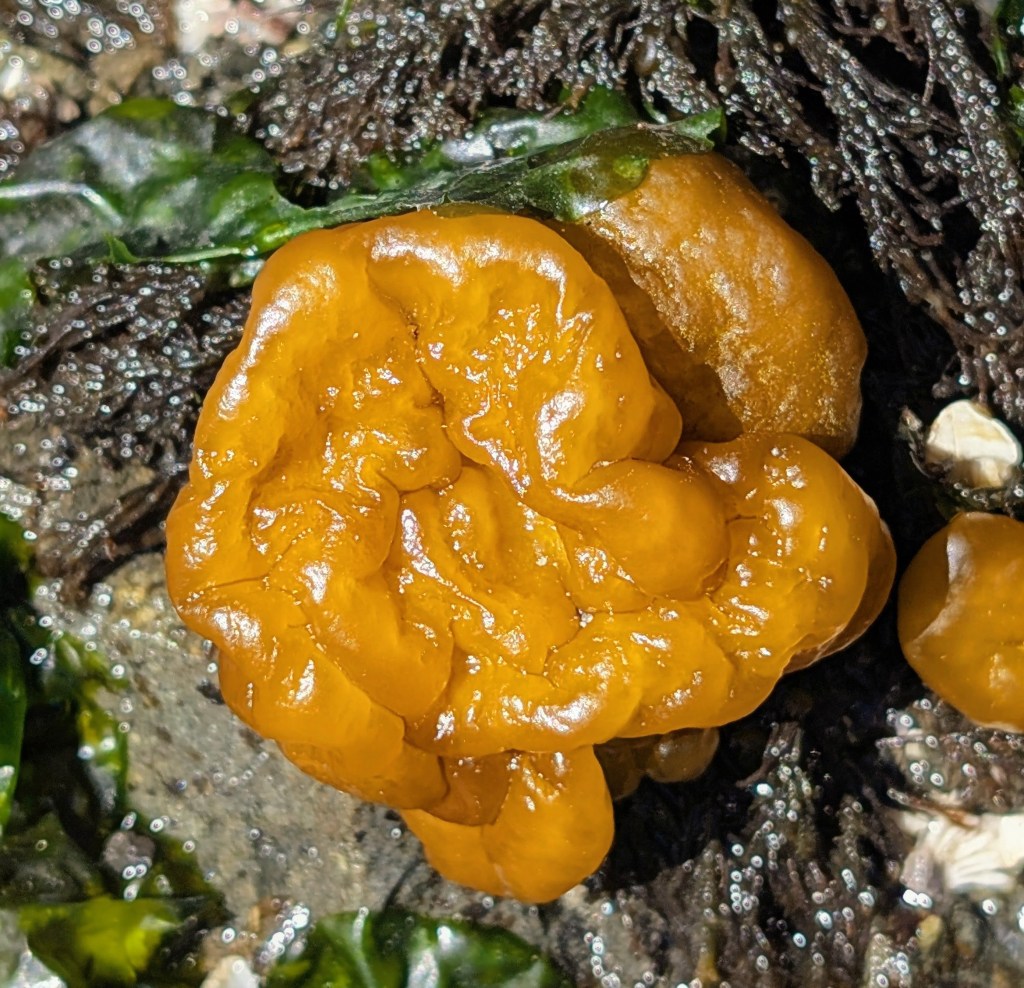
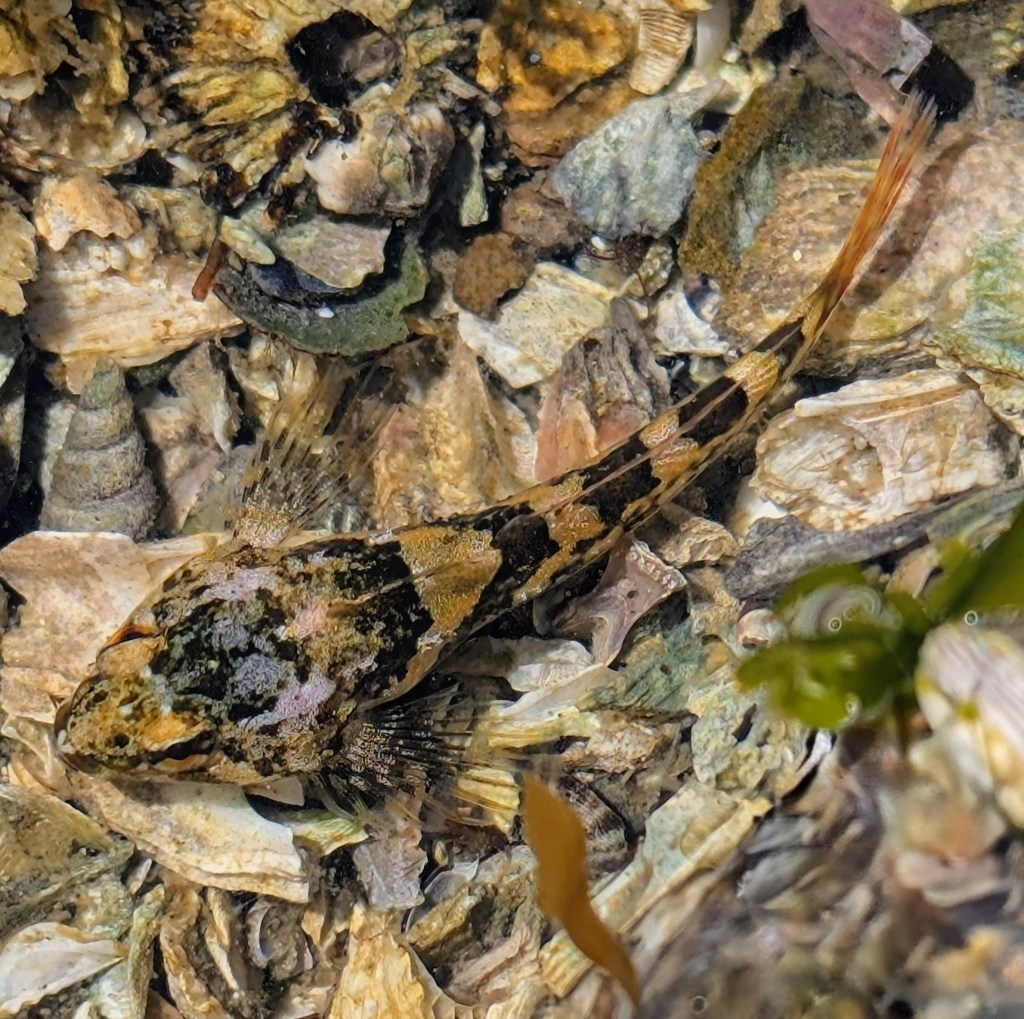
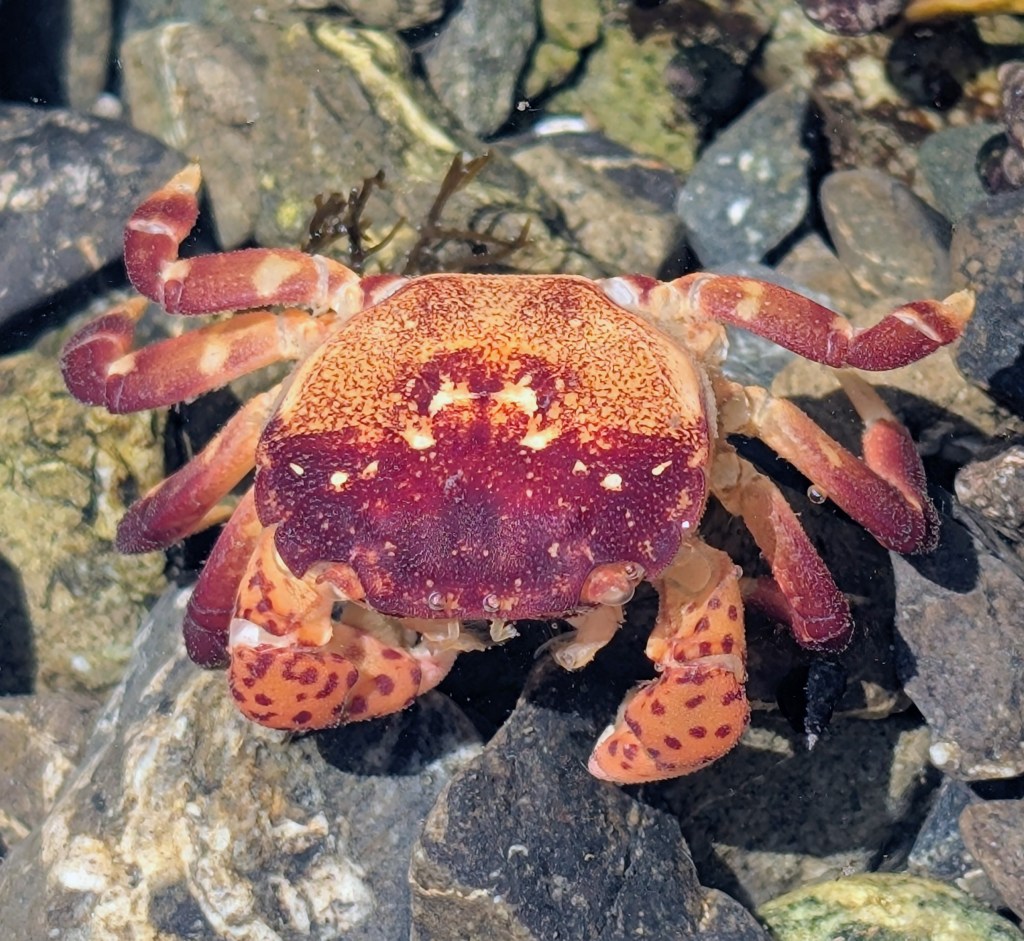
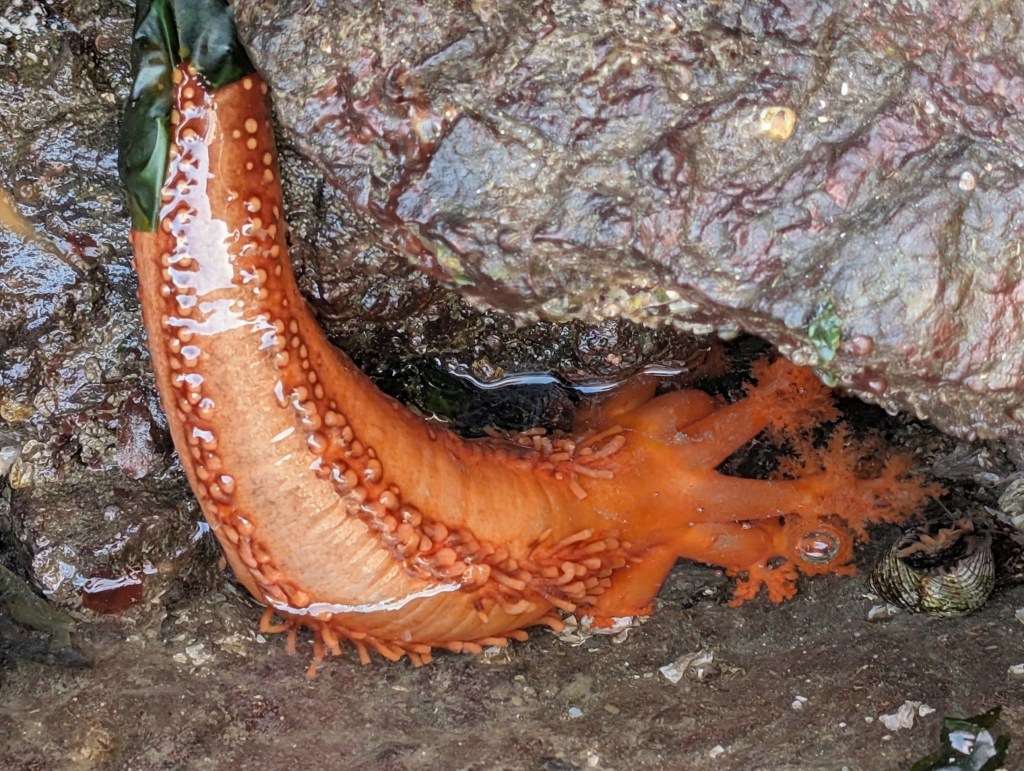
- Aggregating Anemone: The aggregating anemone forms dense clonal colonies (sometimes with thousands of individuals). The body of the anemone is typically olive green to sandy taupe and has tentacles tipped in pink.
- Giant Green Anemone: The giant green anemone is commonly found in low-to-mid intertidal zones. Its color ranges anywhere from bright green to dark olive.
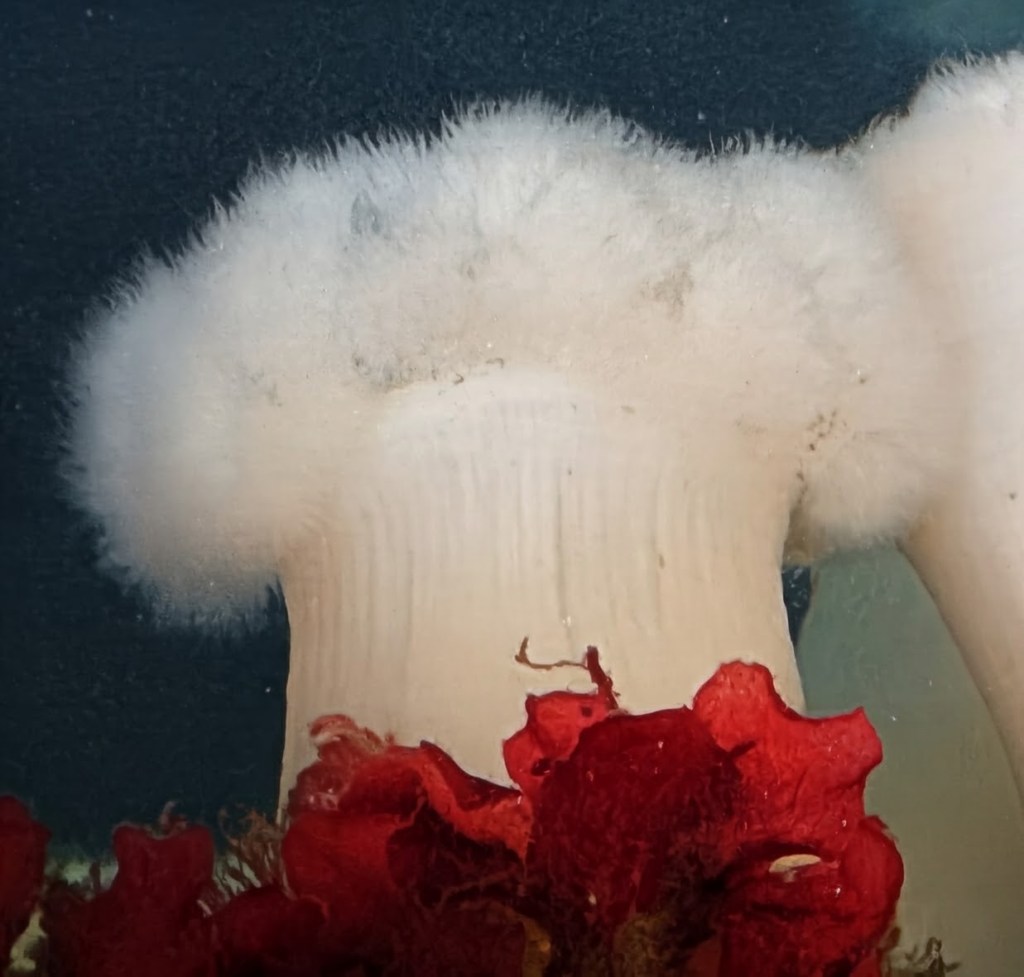
- Plumose Anemone: The giant plumose anemone is commonly found growing in large colonies on the undersides of docks and pilings. It is our largest sea anemone and grows to three feet tall.
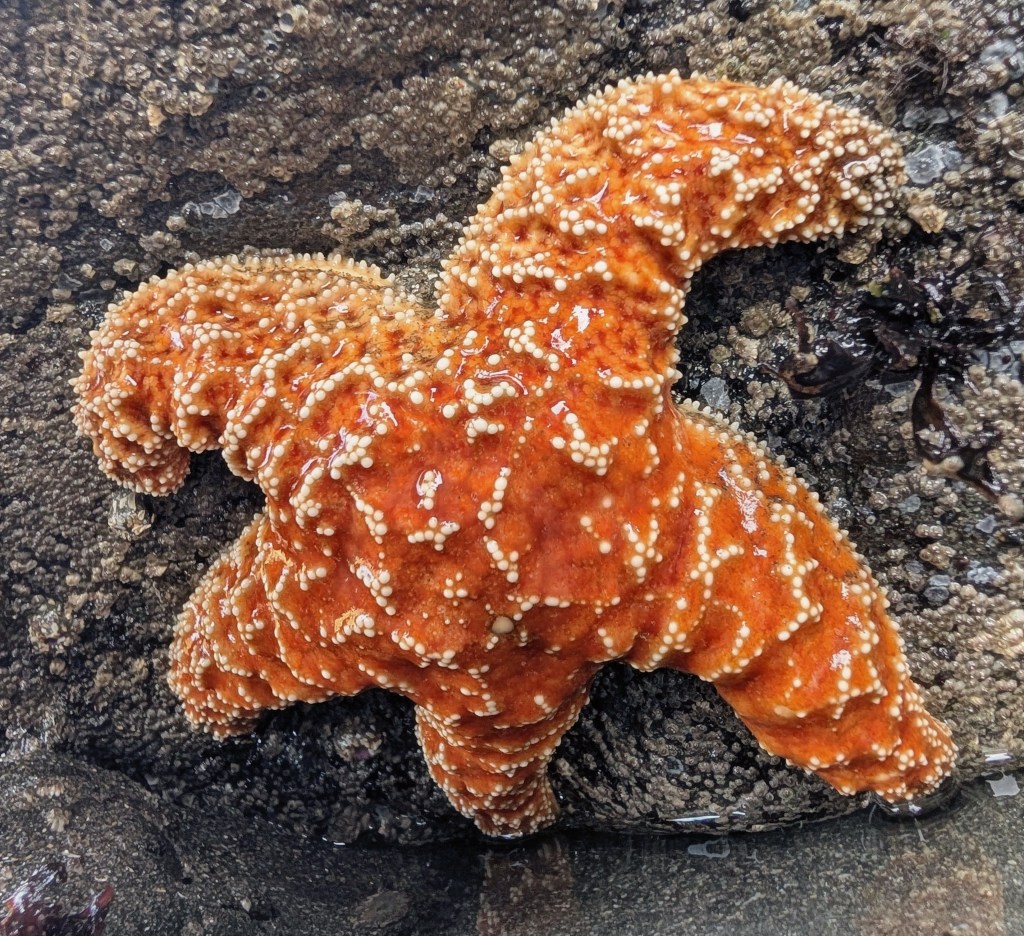
- Ochre Sea Star: The ochre sea star was once numerous in the San Juans, but a wasting disease decimated their numbers. Their population is currently on the rise again. Their color ranges from ochre purple to carrot orange.
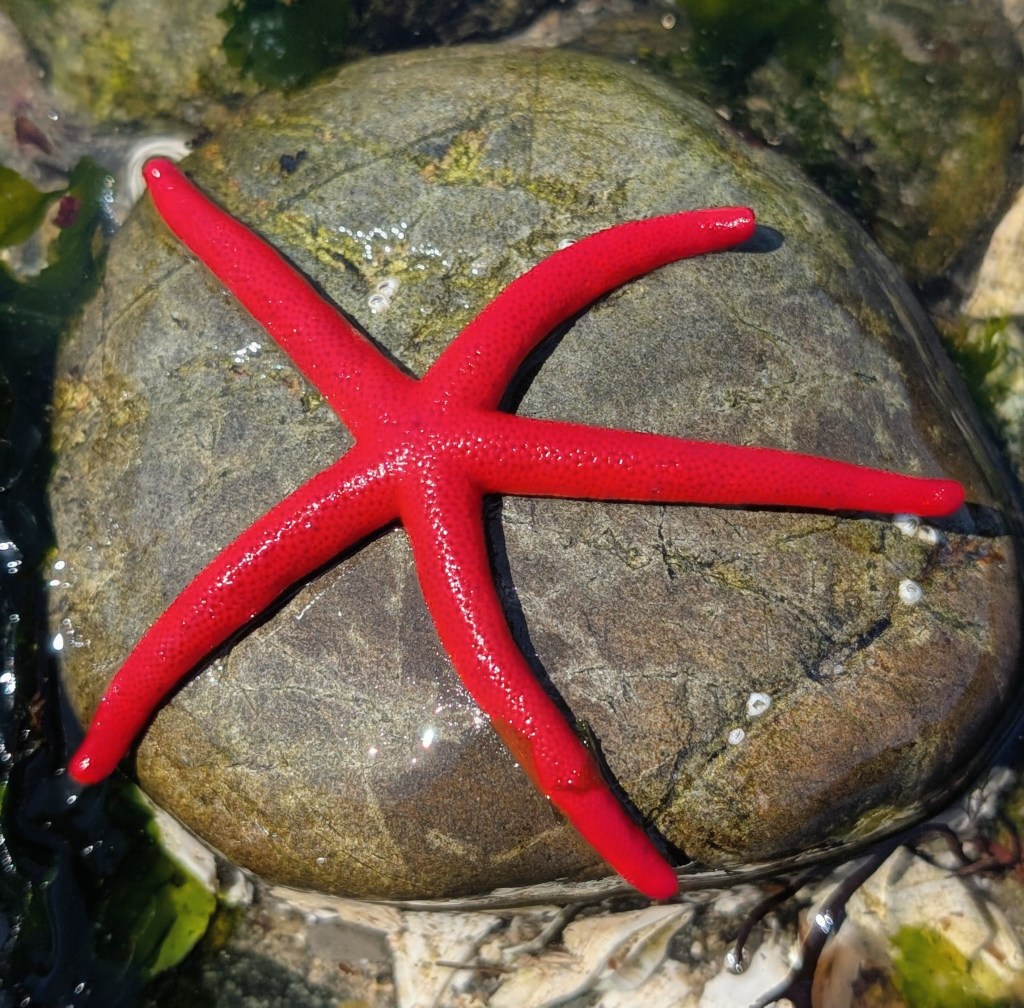
- Pacific Blood Star: The Pacific blood star is a strikingly colored blood-red starfish. It is commonly found under rocks or in shoreline areas still underwater at low tide.
- Sea Cauliflower: The sea cauliflower is a yellowish algae that grows to roughly the size of a tennis ball.
- Tidepool Sculpin: The tidepool sculpin is a small fish commonly found in rocky tidepools. It is mottled with various shades of white, brown, and dark gray.
- Purple Shore Crab: The purple shore crab is a small species of crab that ranges from yellow to deep purple. Its claws have distinctive reddish-purple spots.
- Orange Sea Cucumber: This sea cucumber ranges from bright orange to coral and lives in rocky crevices along the coasts.
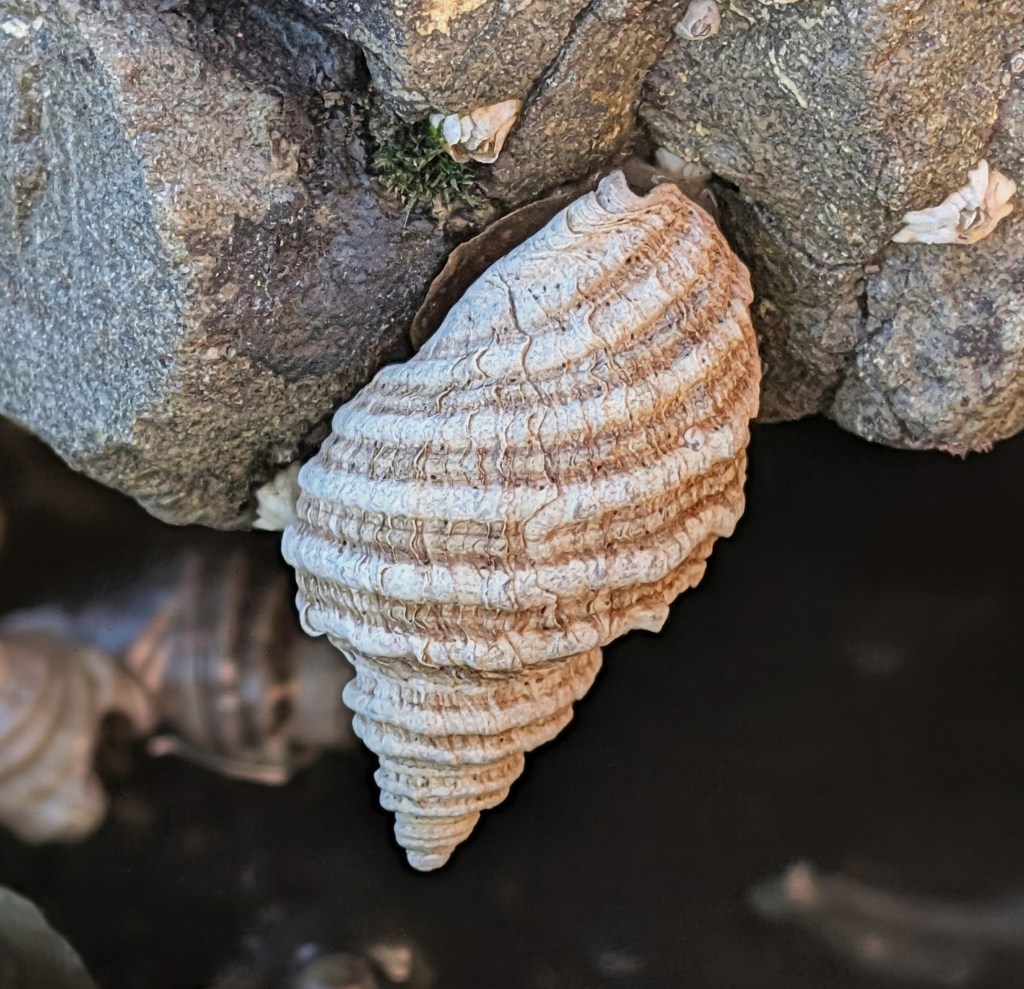
- Striped Dogwinkle: This medium-sized sea snail features a roughly striped shell and ranges from white to tan to black.
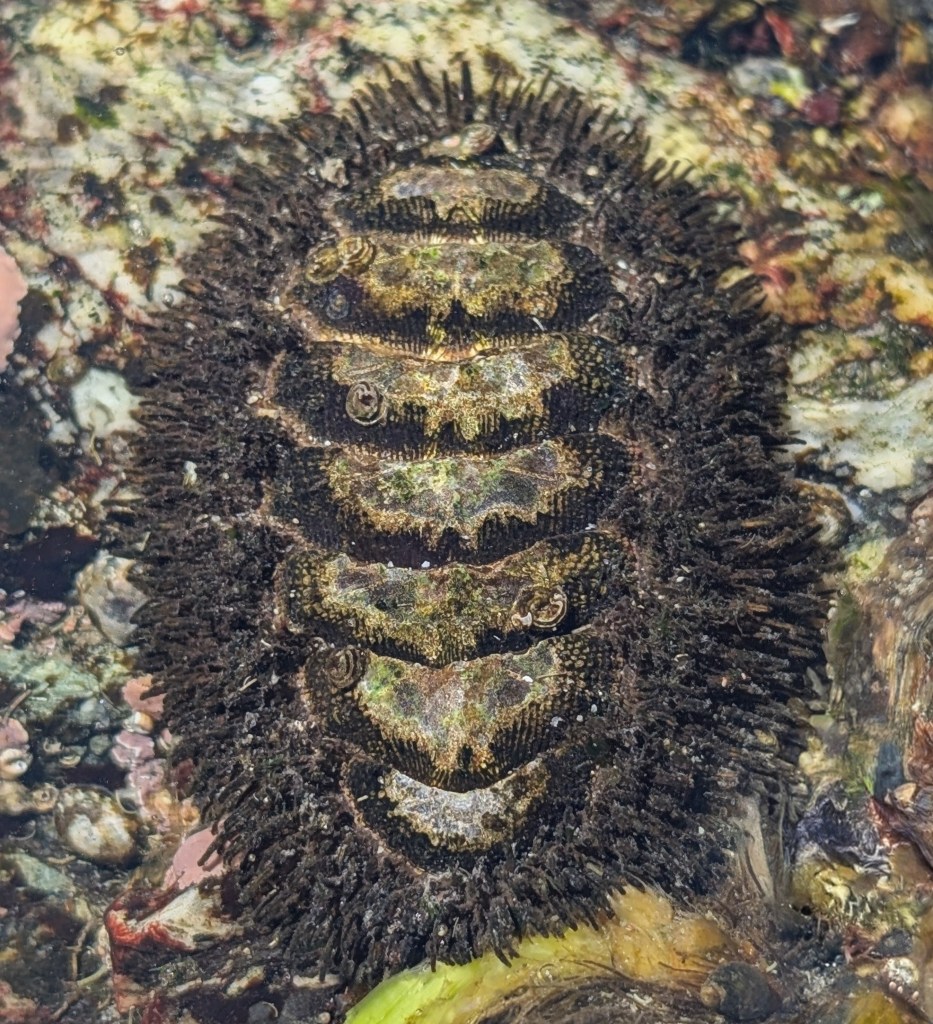
- Mossy Chiton: The mossy chiton is a drab brown marine mollusk with a ring of coarse bristles that sometimes biofluoresce.
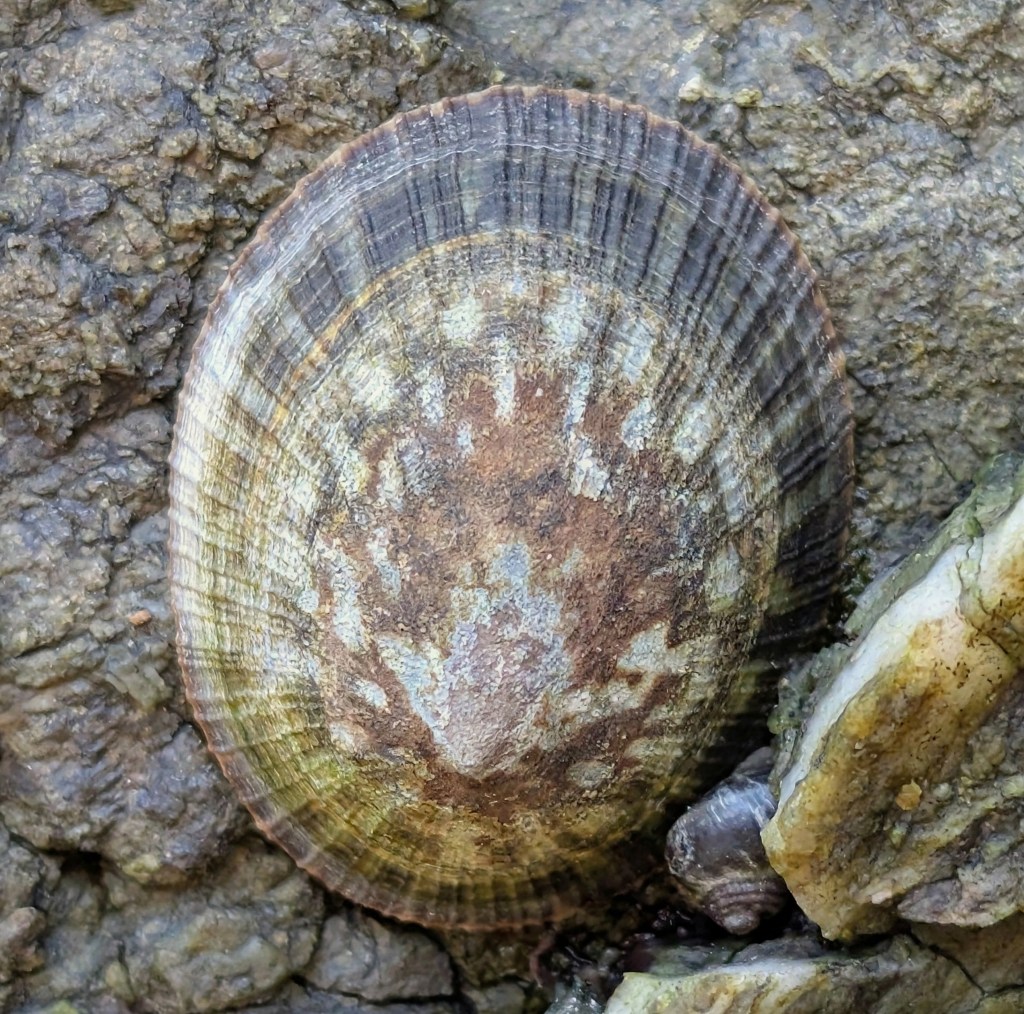
- Shield Limpet: The shield limpet is a type of edible sea snail with an oval convex shell.
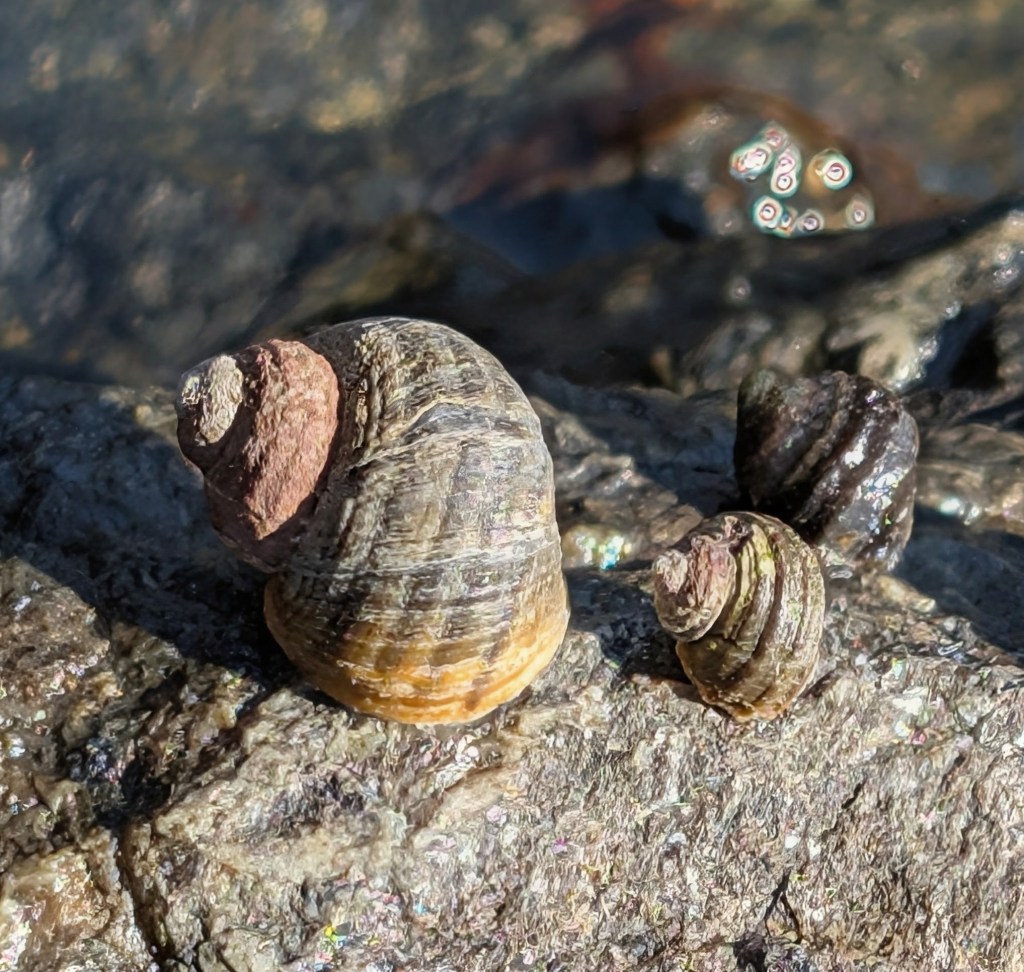
- Sitka Periwinkle: The Sitka periwinkle is a minute sea snail with a round shell and variable coloration.
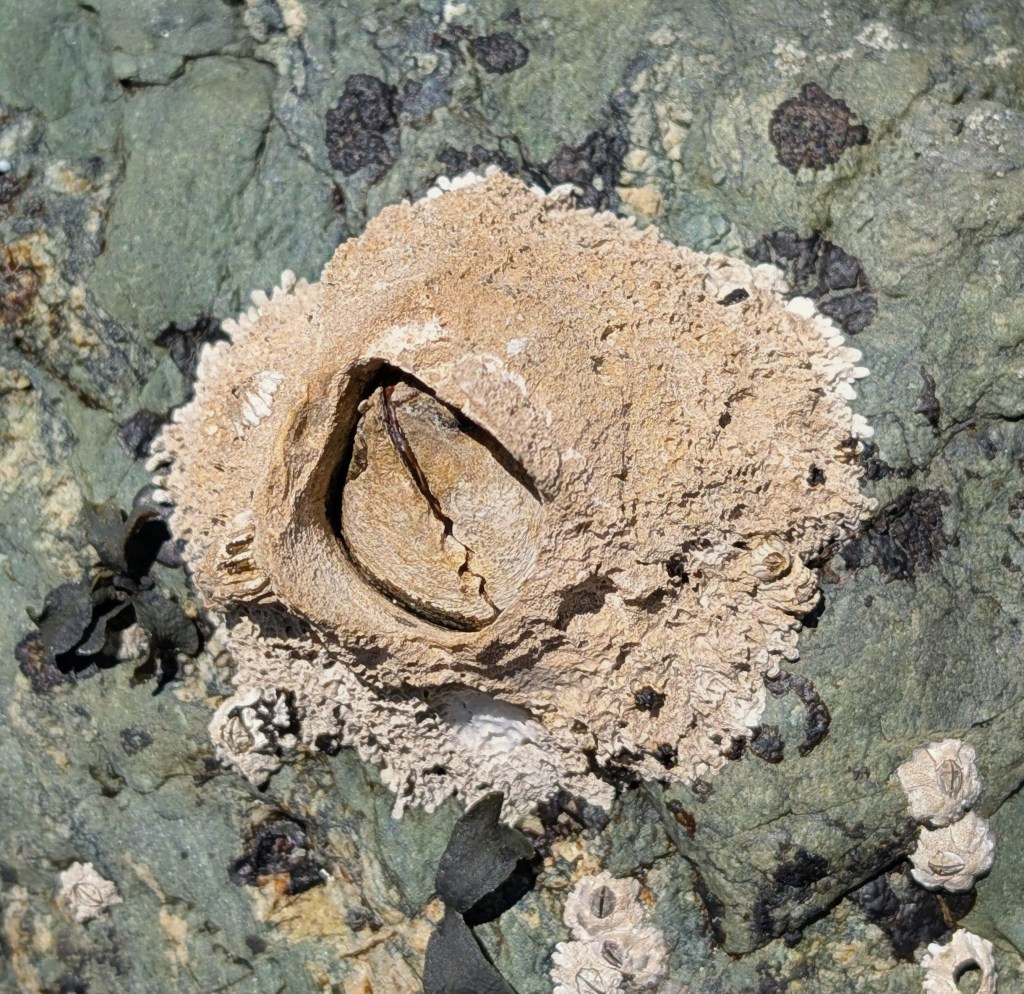
- Acorn Barnacle: There are six barnacle species in the San Juan Islands. Acorn barnacles are one of the most common.
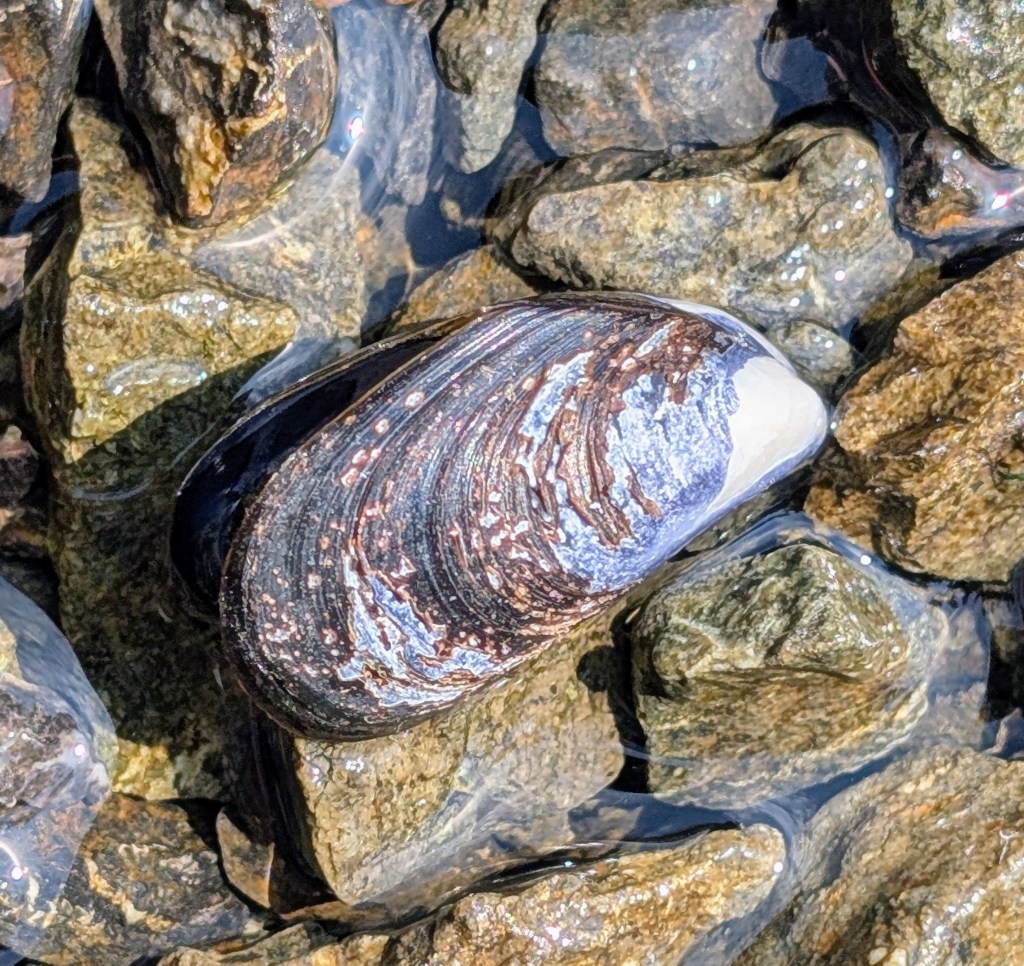
- California Mussel: The California mussel is an edible mollusk with a midnight blue shell. It is found along the Pacific coast from Alaska to Mexico.
Pacific Northwest Salish Sea Tidepooling Resources
If you’re as fascinated as I am with the resilient life that calls a tidepool home, then you’re in luck! There are a couple of great resources available to assist you with identifying what you see. Below is a short list of resources I’ve found especially helpful.
- iNaturalist (App)
- Coastal Life of the Pacific Coast: Discover Tidepools and Identify Beachcombing Finds and Iconic Wildlife (Adventure Quick Guides)
- Between the Tides in Washington and Oregon: Exploring Beaches and Tidepools (University of Washington Press)
- The New Beachcomber’s Guide to the Pacific Northwest (Harbour Publishing)
 hannahrodabaugh.com